

Overview
The Good Doll is a sustainable toy enterprise based in the Nilgiris, Tamil Nadu, creating handcrafted fabric dolls from upcycled textile waste. Incorporated in 2021 as the market-linking arm of Indian Yards Foundation, the venture addresses two problems simultaneously: the plastic-dominated toy industry (90% of toys are plastic, most ending up in landfills within months) and livelihood challenges faced by rural and indigenous women in the Nilgiris. Their dolls are body-positive, colour-inclusive and culturally rooted – a deliberate alternative to Western-standard dolls that dominate the Indian market.
Their Approach
The Good Doll operates as part of a social enterprise ecosystem anchored by Indian Yards Foundation (established 2019), a not-for-profit that trains women from rural and tribal communities in fabric crafts. The for-profit arm provides market access for artisan-made products. For 5-6 hours a day, women work from their homes across Ooty, Coonoor and Gudalur, crafting dolls from pre-consumer textile waste sourced from Tamil Nadu's garment factories. Each doll includes a maker card introducing the artisan, creating transparency and human connection between buyer and craftsperson.
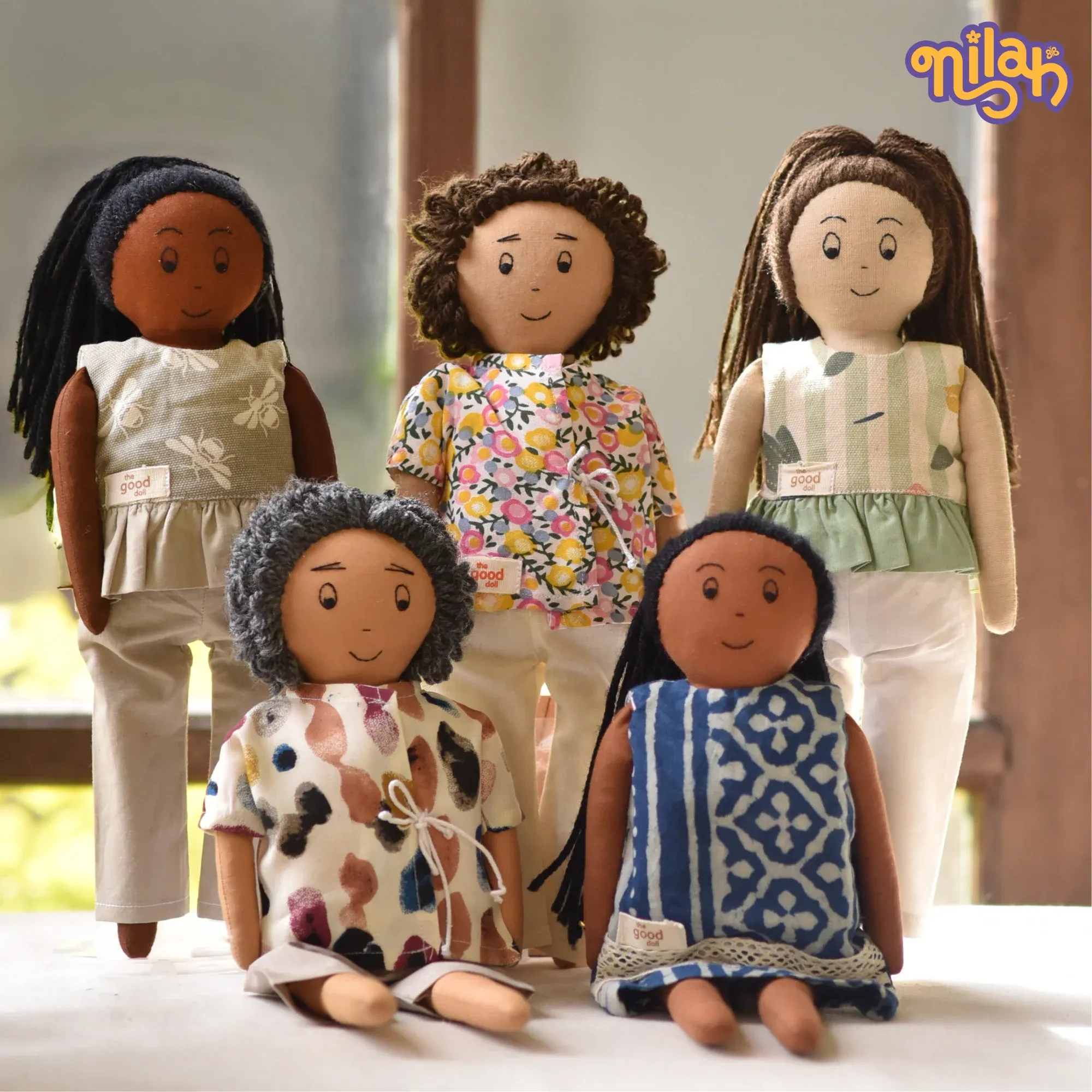
The flagship line features "Nilah," a Nilgiri girl character with an eight-member family.
Key Focus Areas
Circular Economy & Waste Reduction
The Good Doll sources pre-consumer textile waste – factory scraps from Tamil Nadu's garment industry that would otherwise go to landfill – to create doll dresses and accessories. All packaging is 100% biodegradable, using reusable gift boxes with cotton pouches. The products use responsibly sourced wood and fabrics that are rigorously tested to be safe, made under fair and ethical working conditions.
Women's Economic Empowerment
Through Indian Yards Foundation, over 100 women from rural and indigenous communities have been trained in fabric arts. Currently 70-95 artisans are actively employed, many of whom were previously stay-at-home mothers or daily wagers. The foundation has partnered with Rang De, a social investment platform, to help artisans purchase their own sewing machines, positioning them as first-generation entrepreneurs rather than just employees.
Cultural Representation in Toys
The flagship "Nilah" doll line features a Nilgiri girl and her family, designed with diverse Indian skin tones and traditional attire like sarees and kurtis. The founders aim to create dolls where Indian children "see themselves". Expansion plans include illustrated storybooks, comic strips and animation series around Nilah's universe.
Recognition & Impact
The Good Doll has reached 32,000+ customers and generated ₹70 lakh revenue in FY2023-24, with projections of ₹1.2-1.5 crore for FY2024-25. Products are stocked at retail locations including NMACC (Nita Mukesh Ambani Cultural Centre), Go Native, Paperboat Collective and The Amethyst Room at Chamiers. In February 2025, its founders appeared on Shark Tank India Season 4 (Episode 21), bringing national visibility to their model. The venture has received ₹25 lakh in grants from NSRCEL and Tamil Nadu Startup and Innovation Mission, plus ₹40 lakh investment from Rainmatter Capital (Nithin Kamath/Zerodha).
Key People
- Sunita Suhas – Co-Founder
- Suhas Ramegowda – Co-Founder


